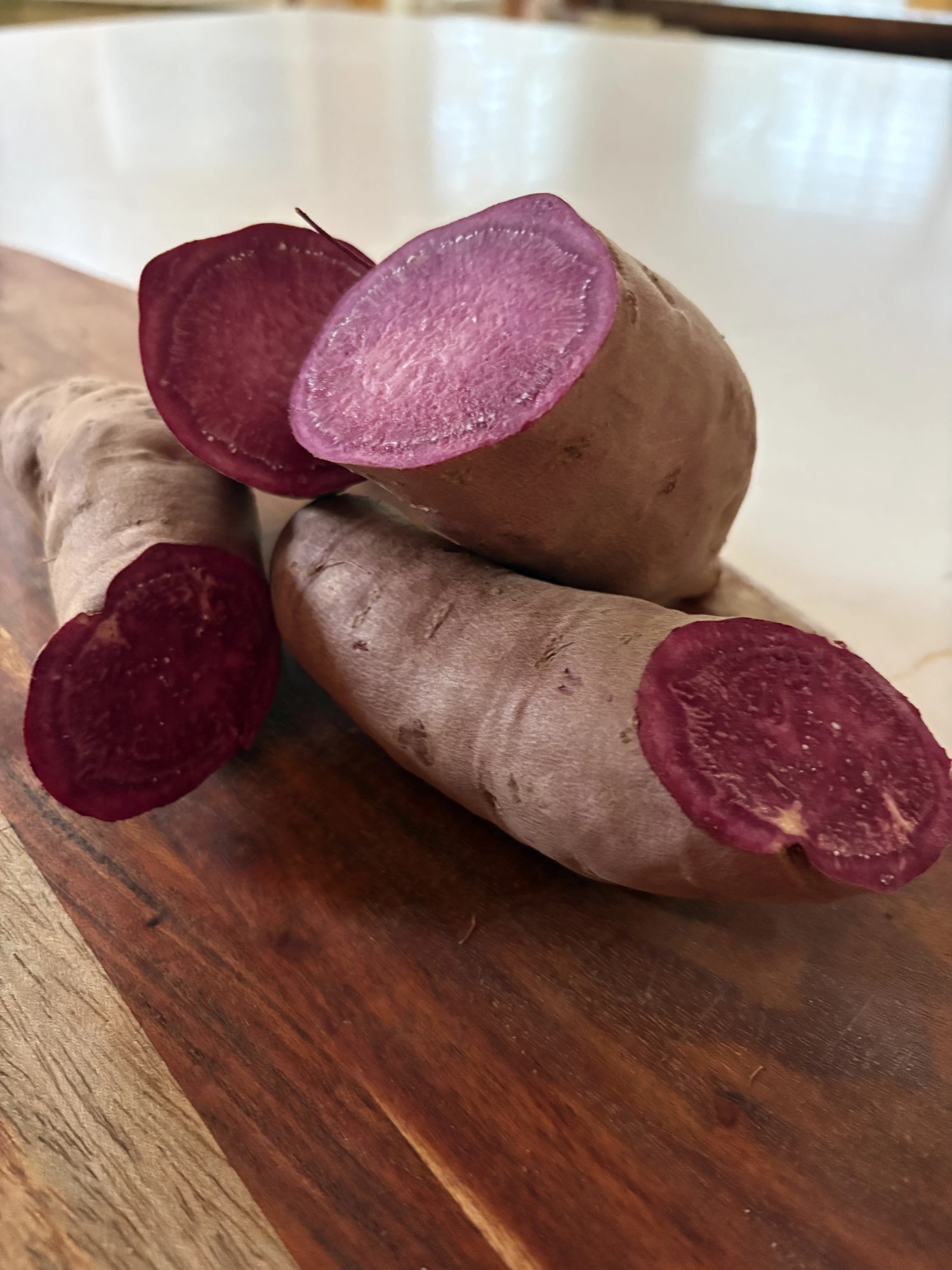
If you've ever sliced into an Okinawan sweet potato, you know how beautiful its deep purple flesh can be. But there's more to this colorful vegetable than its appearance. With its naturally sweet flavor, creamy texture, and beneficial plant compounds, it's a wonderful ingredient to bring into your everyday meals.
A Little History Behind the Purple Sweet Potato
Despite its name, the Okinawan sweet potato isn't closely related to the traditional white potato. It belongs to the morning glory family and originally traces its roots to the Americas.
Over time, sweet potatoes spread throughout the Pacific, becoming important foods in Japan and Hawaii. Today, Okinawan purple sweet potatoes are appreciated for their distinctive flavor, striking color, and versatility in both savory and sweet dishes.
What Makes That Beautiful Purple Color So Special?
The deep purple color comes from naturally occurring plant compounds called anthocyanins.
These same natural pigments are also found in blueberries, blackberries, purple cabbage, and red grapes.
It's one of the things I find so interesting about purple sweet potatoes — their beautiful color comes naturally!
What's Inside a Purple Sweet Potato?
Okinawan purple sweet potatoes offer more than just beautiful color. They're a naturally colorful whole food with a variety of nutrients.
Anthocyanins: These naturally occurring plant pigments give purple sweet potatoes their distinctive color. They're also found in foods like blueberries, blackberries, and purple cabbage.
Fiber: Like other sweet potatoes, purple varieties contain dietary fiber, one of the reasons I enjoy including them in our family meals.
Vitamin C: Purple sweet potatoes contain vitamin C, one of the many nutrients found naturally in fruits and vegetables.
Potassium: They also provide potassium, an essential mineral found in many everyday foods.
Carbohydrates: Sweet potatoes are a source of carbohydrates, making them a satisfying addition to a meal.
One thing I find particularly interesting is the difference between orange and purple sweet potatoes. Orange varieties are known for their beta-carotene, while purple varieties get their beautiful color from anthocyanins.
For me, it's another reminder of why I enjoy bringing a variety of colorful vegetables into our kitchen. Each offers something a little different, and they make everyday meals more interesting and delicious.
Simple Ways to Enjoy Them
One of my favorite things about sweet potatoes is how easily they fit into everyday cooking.
Try roasting purple sweet potatoes with extra virgin olive oil, fresh rosemary, and a pinch of sea salt. You can also mash them with a little butter, add them to a roasted vegetable bowl, or serve them as a colorful side dish.
Their naturally sweet flavor and creamy texture make them a delicious alternative to traditional potatoes, especially during the fall and holiday seasons.
Nat’s Tip 🌿
Eat the rainbow, naturally!
Adding more color to your plate is one of the simplest ways to introduce a variety of nutrients into your meals.
Purple sweet potatoes pair beautifully with roasted Brussels sprouts, carrots, and beets. I love the combination of earthy vegetables, fresh herbs, and a drizzle of good extra virgin olive oil.
Sometimes the simplest ingredients make the most satisfying dishes.
Sources & Further Reading
Simple Choices. Natural Living. Healthier You.